Custom Metal Garden Decor for Wholesale
Custom Metal Garden Decor for Wholesale
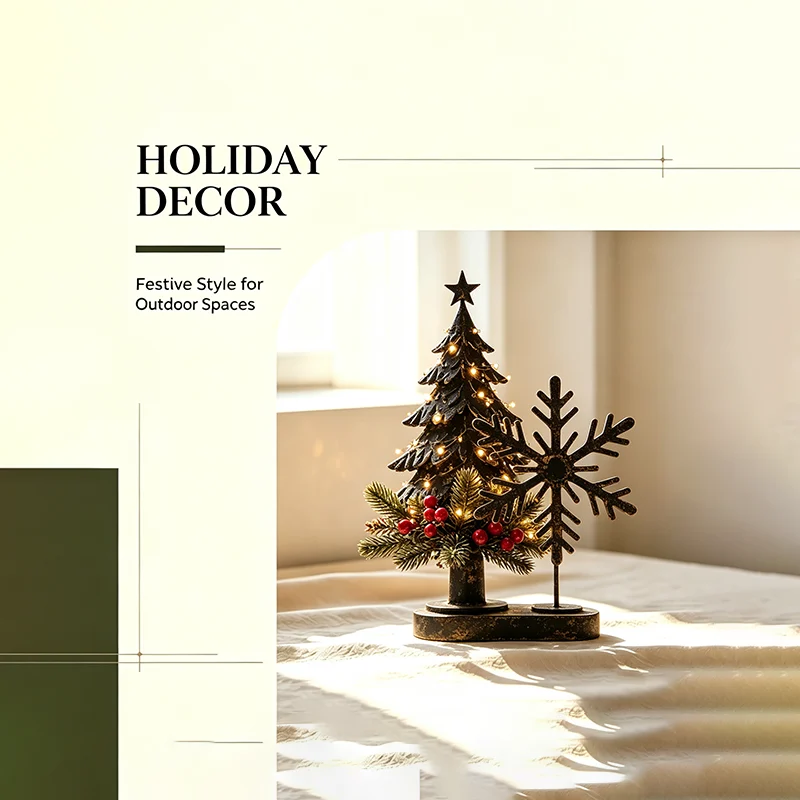
Halloween, Christmas, Easter, July 4th — outdoor holiday decor runs on a calendar, not a trend cycle. Your month-by-month playbook for decorating every season, plus how seasonal metal decor programs work for retailers.

Here’s the thing nobody tells you about holiday decor: it doesn’t follow trends. It follows the calendar. The same inflatable snowman your neighbor bought in 2015 is still running, still lit, still mildly terrifying — because holiday decorating isn’t about what’s new. It’s about what’s due.
And the calendar is merciless. The moment one holiday’s boxes go back to the attic, the next one is already knocking. Garden centers know this. Big-box stores have it down to a science — outdoor holiday decorations start shipping to stores in July for the Christmas set that goes up in October, while you’re still finding sandbox toys behind the garage.
So instead of another “trends” article, this is a playbook. Month by month. What goes up, what it’s made of, and what actually survives being outside in December. Bookmark it. The calendar always wins.
Fall porch decor technically starts August 31st now — the minute school starts, someone within sight of your house puts out a mum. You have roughly three weeks before you’re that house.
The September kit, in order of visual priority:
The September rule of thumb: texture over color. The palette is already gold, rust, and brown — everything matches everything. What separates the good porches from the pallet-dump porches is structure: something vertical (stalks), something round (mums), something flat (sign), something weird (a metal pumpkin). Which brings us to—
Halloween yard decor is now the second-biggest decorating holiday in America, full stop — bigger than Easter, breathing down Christmas’s neck. And it has quietly upgraded from inflatables to construction: metal Halloween decor — silhouetted witches, cats, bats, and haunted house panels in powder-coated black steel — took over the design-conscious end of the category for three reasons:
The power moves: tree silhouettes wired to branches (bats, crows — instant haunted canopy), a backlit witch against a window, and one oversized statement piece — a 4-foot metal cat with glowing eyes beats twelve small things every single time.
The awkward fortnight. Halloween comes down November 1st, and you have until roughly the 15th before the lights go up.
Two camps here: the Thanksgiving decor holdouts (wreaths of preserved leaves, lanterns, “Grateful” on the door — warm, low-key, correct) and the Christmas-at-dawn crowd. No judgment. But the pros do a “harvest reset” — strip the Halloween-specific pieces, keep the neutral fall layer (cornstalks, mums, lanterns), add outdoor lanterns with warm LEDs at the steps. Ten minutes of work, a whole new mood, and the outdoor Christmas decorations slot in clean after Turkey Day.
Everything about Christmas outdoor decorations splits into three jobs: frame it, light it, crown it.
Frame it. The outline of the house is the canvas — rooflines, windows, path. This is a lighting conversation (not ours today), but the frame matters for what comes next.
Light the path. Walkway markers, candle lanterns, metal yard art along the drive. This is where the metal category earns its keep: stake-style snowflakes, stars, and tree silhouettes line a driveway like runway lights, then pull flat for storage in January.
Crown it. The single statement piece. A metal Christmas yard decoration — a 5-foot star on the roof peak, a pair of laser-cut deer that catch the light, a wreath of steel branches that handles the December rain without becoming mulch. One oversized piece at the entry or roofline beats a lawn full of medium ones. (If you’ve been reading along: yes, this is the same “one hero object” rule from every garden category. It works on December lawns too.)
And the sleeper hit of the December category: metal wreath frames and hangers — the unglamorous hardware that everything else hangs on, replaced every single year because nobody can find last year’s.
Nothing ships, everything holds. The one exception: Valentine’s yard decor is a real and growing micro-season — a heart wreath, a “Love Grows Here” sign — mostly because February is so bleak that people will decorate for anything.
The real work of these months is assessment. What rusted? What sagged? What’s the one piece you’re replacing before next season? (This is also when retail buyers place their spring and summer seasonal orders — more on that below.)
Easter decorations outdoor come in two speeds. Pastel-and-cute: wreaths, bunny stakes, egg trees. Or botanical-and-neutral: spring wreaths of greenery, a metal garden sign swapped to “Hello Spring,” lanterns restyled with moss and speckled eggs. The second speed photographs better and transitions straight into May without a full teardown.
The category’s quiet engine is the Easter egg hunt kit — stakes, signs, and holders that turn a lawn into an event. It’s the one purchase of the season that’s interactive, which is why it replenishes every year.
Memorial Day, Flag Day, July 4th — a six-week block where patriotic garden decor owns the yard: flag pole sleeves for the porch, metal star yard stakes, red-white-and-blue lanterns, and the ever-reliable July 4th yard decorations that show up in every parade-route neighborhood in America.
This is also, quietly, when the year’s decor infrastructure gets built — trellises, planters, hooks — which is why the smart move is buying the patriotic layer in forms that re-skin for other seasons (a star stake is a star all year; change the ribbon, change the holiday).
Holiday decor lives outside in the worst weeks of the year. December rain, January ice, October wind. The material hierarchy, learned the expensive way:
| Material | December reality | Verdict |
|---|---|---|
| Powder-coated steel | Shrugs off ice and wind | The seasonal workhorse |
| Corten steel | The weathering is the look | Buy once, deploy every year |
| Wood / plywood cutouts | One good winter, maybe two | The sad-warped-snowman tier |
| Inflatable fabric / plastic | Deflates, fades, tears | The annual landfill contribution |
| Wired light strings (on anything) | Socket corrosion by year two | The replacement revenue |
Metal holiday decor wins the category for a reason your storage shelf understands best: it survives the off-season too. Flat-packed steel stakes and silhouettes stack like plates; eleven months of attic time does nothing to them. Every wood cutout you own is warping right now, and every inflatable is slowly going tacky at the seams. The good stuff comes down, goes flat, comes back up next year — same silhouette, one more season of character.
You know the rule by now: if the listing doesn’t name the material, it’s the kind you’ll be re-buying next November.
If you’re reading this from the commercial side, you already know the brutal truth of seasonal decor: it’s a calendar business with a shelf-life business inside it. The consumer playbook above maps directly onto the buying calendar — run in reverse:
Specialist manufacturers run OEM/ODM seasonal programs across all four drops — custom silhouettes, finish engineering for outdoor winters, retail-ready flat-pack cartons, and display systems that turn a seasonal aisle into a photo op. The buyers who win the season arrive with their calendar worked out twelve months ahead and their finish direction already decided — which is exactly what the sample calendar rewards.
When is it socially acceptable to put up outdoor holiday decorations?
The honest windows: fall after Labor Day, Halloween mid-September, Christmas the weekend after Thanksgiving (earlier is fine, December 1st is the safe consensus), patriotic by Memorial Day. Take it all down within two weeks after each holiday — that’s the real rule people notice.
How do I keep holiday decor from blowing away?
Stakes, weight, and geometry. Ground stakes for anything in a yard; sandbags or water weights for porch pieces; and favor low-profile metal silhouettes over tall inflatables anywhere the wind runs.
Can I leave metal seasonal decor out all season long?
That’s the whole point of the material — powder-coated and corten steel ride out rain and ice. Lights and fabric still need to come in during storms.
Is there a “too much” threshold?
Yes, and the inflatables crossed it years ago. The design rule from every garden category applies to tinsel season too: one hero piece per sightline, lighting with rhythm, and restraint that reads as confidence.
Holiday decorating is the one category where your neighbors are also your deadline. The calendar doesn’t negotiate — but it does reward the prepared.
And the preparation is simpler than the aisles make it look: one hero piece per holiday, a lighting plan, a neutral base layer that rolls from season to season, and materials built to come back next year. Do that, and October stops being a scramble and starts being a swap — the bats go up where the stars came down, and everything’s flat in the attic by the 8th.
Decorate the calendar, not the trend. The calendar always comes back.