Custom Metal Garden Decor for Wholesale
Custom Metal Garden Decor for Wholesale
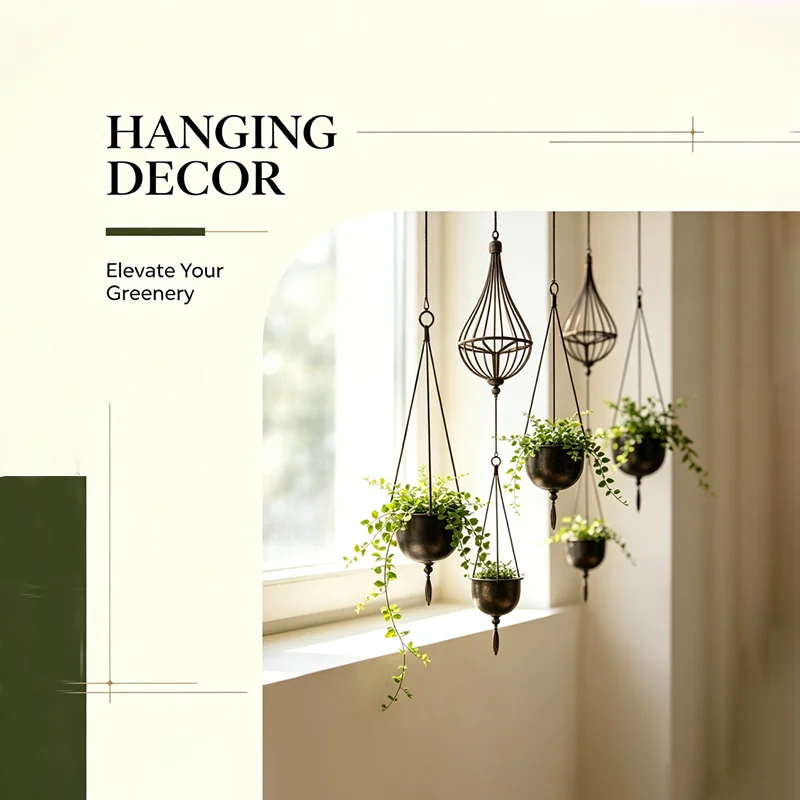
From hanging lanterns to porch signs and wind chimes, hanging decor is 2026’s quietest garden boom. Explore the styles, materials, and styling rules that define the category — plus how custom metal hanging decor programs work for retailers.
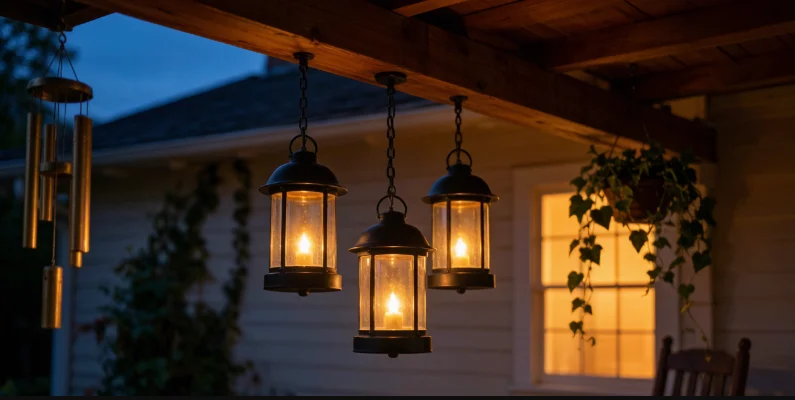
Every garden has four walls of design conversation: the borders, the fences, the patio floor, and the furniture. But stand in any well-designed garden at dusk and look up — at the porch beam, the pergola, the tree branch — and you’ll find the part nobody plans: nothing.
That empty overhead plane is exactly where hanging decor lives, and it’s quietly become one of the fastest-moving categories in outdoor living. Not because anyone declared a trend, but because of a simple spatial truth: once a garden’s borders and beds are full, the only direction left to decorate is up.
The overhead layer also does something no border can: it moves. Hanging garden decor catches the breeze, sways, chimes, and flickers — bringing a garden to life in the half-light of evening when everything planted has gone still. That’s why porches, pergolas, and patios have become the most-styled spaces in the American yard, and why the category that furnishes them barely keeps shelves stocked from May through September.
Here’s the full picture: what’s selling, how designers use it, what survives the weather, and what custom programs look like on the manufacturing side.
Designers talk about the “fifth wall” — the ceiling — indoors. In a garden, the fifth wall is porous: porch beams, pergola slats, tree canopies, fence tops, and eaves. Hanging outdoor decor earns its place there by doing three things no planted element can:
The rule the pros follow: treat the overhead like a display shelf, not a coat rack. One to three considered pieces per sightline — a lantern at the beam, a chime in the corner, a trailing planter at the edge. Hanging decor fails when it’s hoarded: fifteen sun catchers on one hook turns a porch into a flea market booth.
Hanging lanterns — and their candle-holding siblings, hanging candle holders — are the single strongest sub-category, and they’ve been upgraded by the outdoor-room trend: a porch is now a living room, and a living room needs lighting. The 2026 look is metal frame lanterns in matte black, rust, and antique brass finishes, sized generously (14 inches and up reads as intentional; a cluster of three heights reads as designed). LED pillar candles solved the safety objection, and dusk-to-dawn versions turned the porch lantern into set-and-forget decor.
The other half of the layer is alive. Hanging planters and hanging flower pots — trailing petunias, ivy, ferns — are the traditional core of the category, and the current shift is material: black metal cone and hemisphere planters with coco or liners have taken share from plastic, because a hanging basket frame is as visible empty (in winter) as full (in summer). Metal hanging planter frames also age gracefully — rust and verdigris finishes that improve rather than embarrass.
Porch decor has become its own search universe, and the porch sign is its anchor: hanging wood-and-metal welcome signs, seasonal plaques (“Happy Fall Y’all” and its eleven cousins), and personalized family-name pieces that hang from the porch beam or lean against the door. This is the sub-category with the strongest gift curve and the most reliable seasonal rotation — spring florals, summer coastal, fall harvest, winter greens — which is exactly why retailers plan it four drops a year.
The most polarizing and most beloved sub-category. Wind chimes have been rescued from their 90s kitsch reputation by better materials and better tuning: deep-toned metal chimes, minimalist single-tube designs, and sculptural bells now sell to design-conscious buyers who wouldn’t have touched the aluminum-tube chimes of decades past. Sound is the only decor sense the garden can’t get from anything visual — a tuned chime gives a garden an audio layer no other category provides.
A hanging bird feeder or hanging birdbath is hanging decor that pays rent in entertainment: it decorates the beam and stocks it with cardinals. The category’s genius is retention — a feeder that’s emptied weekly brings the customer back to the garden, and often back to the store, twelve months a year.
Glass and acrylic crystals had their moment; the 2026 version is metal — mirrored spinner baubles, pierced-steel hanging garden ornaments that throw moving light patterns across a porch floor at golden hour. Paired with the lantern category, they cover the overhead layer from noon to midnight.
Every season gets its overhead drop: wreaths (the category’s December heavyweight), hanging basket arrangements in fall, spooky silhouettes in October, nesting ornaments in spring. The buyers who plan this layer treat it as a calendar, not a shelf — and the manufacturers who win it are the ones who can deliver four coordinated collections a year.
A hanging piece lives a harder life than anything sitting in a border. It takes wind load on a small mount point, spins and swings in storms, and hangs at eye level where every flaw shows.
| Material | Look | Outdoor Lifespan | Verdict |
|---|---|---|---|
| Powder-coated steel | Crisp, any finish | 8–15 years | The workhorse — ideal for lantern frames & signs |
| Corten steel | Architectural rust | 15–25+ years | Premium choice for planters & sculptural pieces |
| Cast aluminum | Traditional, detailed | 20+ years | Coastal winner — rust-free, salt-proof |
| Brass / copper accents | Aging patina | Generations | The premium detail on chimes & lanterns |
| Plastic / resin | “Looks like” metal | 1–3 seasons | The category’s old reputation, deserved |
Metal hanging decor earns the category’s core position for reasons specific to being hung: metal’s strength-to-weight ratio means a large lantern or wide basket frame stays light enough for a standard ceiling hook; metal takes stamped, pierced, and formed detail that reads as craft from six feet away; and the right finishes age into patina instead of chalk. One engineering note that separates serious product from shelf product: the hanging hardware is part of the design. Chains, S-hooks, and wind-locks rated to the piece’s storm load are the difference between a lantern that sways for a decade and one that lands on the patio in the first October gale.
The standing rule applies up here too: if the listing doesn’t name the material and finish, assume it’s the kind that fades.
The commercial side of hanging decor is unusually attractive to buyers, for one structural reason: the category multiplies. A customer who buys one hanging lantern needs a second for symmetry, a chain or hook, candles, seasonal inserts, and eventually a full porch program. Basket-plant buyers return for liners, hooks, and seasonal plants. It’s a repeat-purchase engine wearing a decor label.
Specialist outdoor hanging decor manufacturers now run full OEM/ODM programs across the category, which in practice means:
Two category-specific notes for buyers: first, hanging decor ships flat and nests — lantern frames and sign plaques pack down to a fraction of their display size, which makes the category’s freight economics some of the best in garden decor. Second, plan the hardware attach rate: hooks, chains, and wind-locks are the highest-margin add-on in the category and the most-forgotten item on the customer’s list. A display that prompts “you’ll need a hook” converts twice.
The buyers seeing the best results arrive with a finish direction (matte black is the volume leader; rust and brass the growth finishes), a target price ladder across the porch program, and a seasonal calendar — which turns an inquiry into a first sample run within weeks.
How do I hang decor from a porch ceiling without damaging it?
Use a beam hook rated to the weight plus wind load — the swing multiplies the force. Vinyl and aluminum porch ceilings take specialty hooks; when in doubt, hang from the beam, not the panel between beams.
Do wind chimes really bother neighbors?
Deep-toned chimes carry less than the bright aluminum-tube kind. Place them into the airflow on your own side of the yard, and the neighbor’s complaint rate drops to roughly zero.
What’s the best trailing plant for hanging baskets?
Petunias and calibrachoa for sun, ivy and ferns for shade, lysimachia for spill. The pros’ trick: the basket frame is the decor — buy the best-looking empty one, because it holds the porch from November to April.
Can I leave hanging decor up all winter?
Metal lanterns, planters, and signs — yes. Glass and acrylic sun catchers — take them in; freezing hail doesn’t negotiate.
Is hanging decor a gift category?
It’s arguably the garden gift category: wind chimes, lanterns, and personalized porch signs hit the universal gift criteria of “pretty, boxed, and under forty dollars.”
Garden design spent a century looking down — at beds, borders, and paths. The current generation of gardeners looked up, found a porch beam and an empty pergola, and started hanging things from them.
That’s the whole story of hanging decor: it furnishes the space people actually inhabit, it moves when everything else is still, and it turns a covered slab into an outdoor room. One lantern at the beam, a chime in the corner breeze, a trailing planter softening the rail — done in an afternoon, enjoyed every evening.
Decorate the fifth wall. It’s the one you sit under.