Custom Metal Garden Decor for Wholesale
Custom Metal Garden Decor for Wholesale
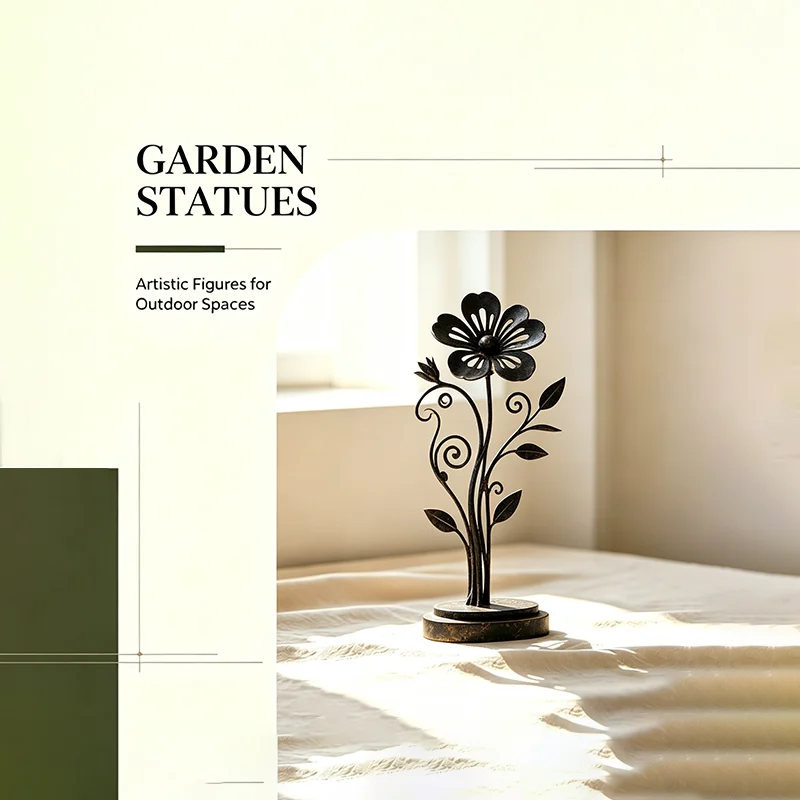
From classic animal statues to modern abstract sculptures, garden statues are back in a big way. Explore 2026’s most-loved styles, placement rules, material guidance, and custom metal statue programs for retailers.

If you asked a garden designer five years ago about garden statues, you’d get a polite wince. The category had a reputation problem: cherubs, gazing balls, and a plague of mass-produced resin frogs that faded to chalky gray by their second summer.
Ask the same question today, and the answer has flipped entirely.
Garden statues are now one of the fastest-moving ornament categories in outdoor decor — and not the same old stuff. A new generation of designers and homeowners has rediscovered what palace gardens, English estates, and Japanese temple grounds always knew: a well-chosen statue is the single most powerful tool in garden design. It creates a focal point, sets a mood, and makes a space feel intentional in a way no plant ever can.
The rescue mission had three parts: better materials, cleaner designs, and a return to real styling principles. Here’s the whole story — what’s selling, how to use it, and how the custom-manufacturing side of the category has matured.
Before we get to trends, the design theory — because this is where most statue purchases go wrong.
A garden is organized chaos: a hundred living things competing for attention. A garden statue is the still point in that chaos. It performs three jobs nothing else can:
The classic mistake is treating statues as filler — scattering small pieces wherever a bed looks empty. The pros do the opposite: one meaningful statue, placed deliberately, beats a dozen scattered ones. Everything else in this article builds on that principle.
Animal garden statues have always sold, but the current wave is more sculptural and less cartoonish. The trending menagerie:
The styling shift: matte black and rust-patina finishes have replaced painted “realistic” colors. A metal cat statue in a single dark finish reads as art; the same cat in painted calico reads as novelty. The materials are doing the realism’s job now.
Angel garden statues, Madonna pieces, and St. Francis (the patron saint of gardens and the category’s eternal bestseller) remain the most gifted segment — memorial gardens, retirement communities, and traditional landscapes keep demand steady decade after decade. The classic Greek garden statue — a torso, a bust, a weathered goddess — has returned strongly in the “modern classical” trend: one classical piece in an otherwise contemporary garden creates instant depth and contrast.
The fastest-growing segment. Geometric forms, spheres, orbiting rings, and pierced panels in powder-coated steel or stainless — abstract garden statues work in the minimalist landscapes that ceramic peacocks never could. Pair one with ornamental grasses and a gravel bed, and you have a garden that photographs like a design magazine.
Buddha garden statues anchor the meditation-corner trend: a shaded seat, a small water feature, a single serene figure. The look has crossed firmly from novelty into mainstream landscape vocabulary.
Yes, gnomes — but curated gnomes. The trend is one or two well-made pieces staged with irony (a gnome “guarding” a formal herb garden), not the lawn-ornament hoards of the 90s. Whimsy works best in small, confident doses.
Placement: The Rules That Never Changed
Statue placement is the oldest garden design discipline there is — and the rules are refreshingly durable:
The commercial side of the statue category has quietly reorganized itself around the same forces driving the trend — and custom metal manufacturing sits right at the center of it.
Specialist metal garden decor manufacturers now run full OEM/ODM statue programs, which in practice means:
Two category-specific notes for buyers: first, statue programs benefit unusually from seasonal rotation planning — angel and classical pieces peak Q4 (memorial + holiday gifting), animal and modern pieces peak spring; a split program smooths the curve. Second, metal’s shipping weight advantage over cast stone changes the e-commerce math entirely — dimensional-weight-heavy stone statues are freight nightmares, while comparable metal pieces move through standard parcel networks. For online-led retailers, that single factor can decide the whole assortment.
The buyers seeing the best results arrive knowing their target price points, their region’s weather profile, and a rough silhouette direction — which turns an inquiry into a sample run remarkably fast.
Do garden statues scare away birds and wildlife?
Briefly at first, not at all after habituation — birds routinely perch ON garden statues within days. Moving ornaments and feeders coexist with statuary everywhere; ask any heron statue being used as a perch by an actual heron.
What size statue do I need?
Bigger than you think. A statue that reads as generous in a store display often disappears in an open border. For a standard bed focal point, think 30 inches and up; for open-law “terminated view” placements, 48 inches and up.
How do I clean a metal garden statue?
Powder-coated: rinse, touch up chips. Patina finishes: leave them alone — that weathering is the point. Stainless: rinse. It remains the lowest-maintenance category in the garden.
Are statue collections a thing for garden centers, or is this a one-piece purchase for consumers?
Both — and that’s the commercial opportunity. Consumers buy the hero piece, then return for pedestal companions, smaller accents, and seasonal rotations. Programs designed in families capture the second and third purchase.
The garden statue is the oldest ornament in the book — and its current revival is earned, not nostalgic. Better materials replaced the fading frogs. Sculptural restraint replaced the clutter. And a generation of gardeners discovered that one still, well-placed figure does more for a garden than a truckload of plants.
Whether you’re placing one serene figure at the end of a border, or building a statue program that carries a retail season — the principle is the same. Choose one thing with presence. Put it where the eye travels. Let the garden grow around it.