Custom Metal Garden Decor for Wholesale
Custom Metal Garden Decor for Wholesale
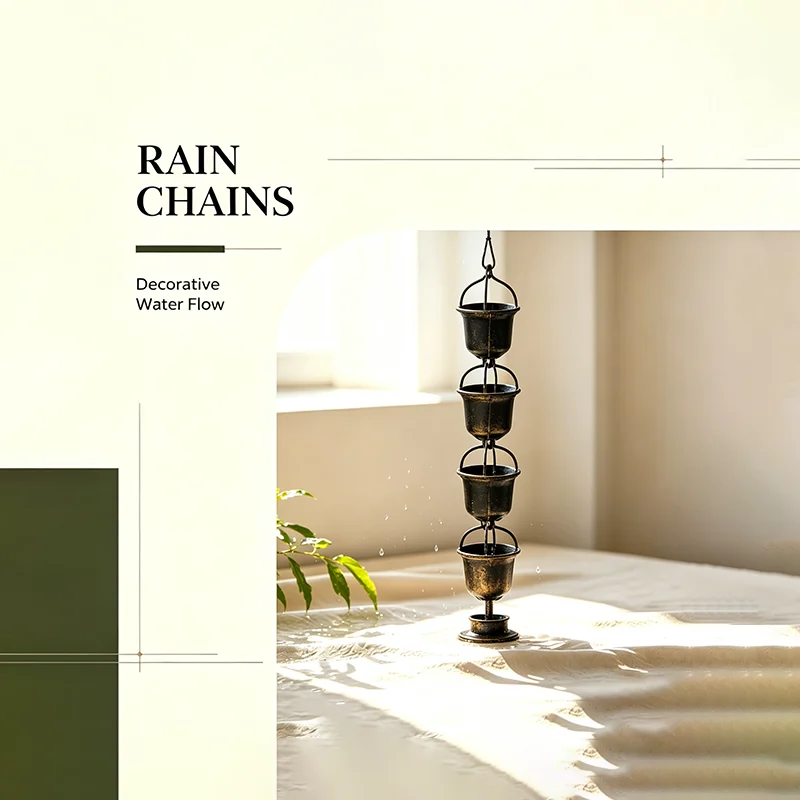
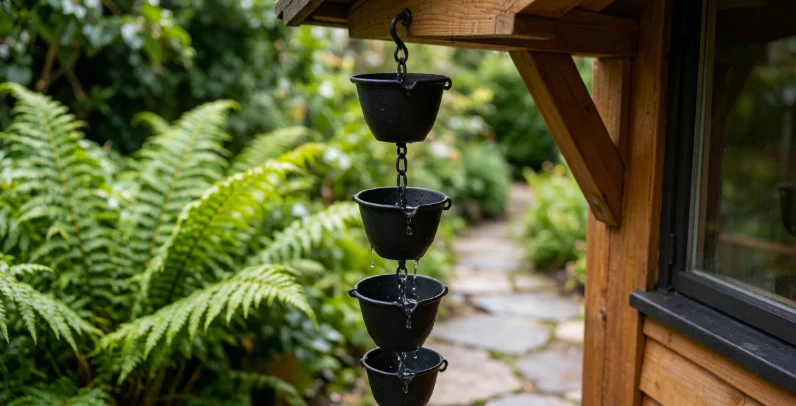
Most rain chain articles start at the gutter. This one starts at the laser.
That’s where every rain chain in our shop begins — as flat iron sheet. Coils and plates wheeled in from the mill, and the first thing that happens to them is the cleanest cut in metalworking: a fiber laser tracing cup outlines, link geometry, and decorative silhouettes out of flat stock, one program, one sheet, no dies to wear out. Nothing about a flat sheet suggests a storm show. What turns it into one is five stages of fabrication, and if you’ve ever wondered why one chain sells for the price of a planter and another looks identical in photos and doesn’t — the answer is always somewhere in these five stages. So let’s walk the floor.
(Why write this down? Because our customers are brands, importers, and retailers — people who will put their own name on this product — and the more they know about how it’s made, the better the questions they ask us, and the better the chain we build for them. A transparent process is a spec sheet you can read.)
The cup is the rain chain’s entire personality, and in an iron shop it’s born in two steps.
First, the laser cuts the cup blank — the flat disc or square with its rim and any decorative pattern already in it. This is the stage that makes iron rain chains designable: a laser doesn’t care whether it’s cutting a plain circle or a brand’s signature leaf or a lantern silhouette that echoes the customer’s lantern catalog. Custom cup silhouettes are a program change, not a retooling — the flexibility lives in the software, and it’s why private-label buyers can own a cup shape nobody else has.
Second, the blank goes to the press — stamped and formed into the open cup, with the flutes, pleats, or stepped profiles pressed in as the cup takes its final shape. Forming stiffens the wall, so a lighter-gauge iron cup holds its shape through a decade of water weight and freeze cycles. We’re watching two things through this stage: wall gauge after forming (stretching thins metal, and thinned corners are where five-year failures start) and rim consistency, because the rim is what water passes over a thousand times a season.
The quality tell in this stage, for anyone auditing a supplier: run your thumb around ten cups from one chain. On a well-made chain, every rim is identical — same flare, same thickness, same feel. Waviness or variance between cups means worn tooling or thin stock, and that chain will age unevenly and splash unevenly. Water forgives nothing.
Each cup needs its connection geometry — a center hole pierced in the forming stage, a link, or a riveted bail — and this is the most under-appreciated spec in the entire category.
Here’s why. The connection decides the articulation: how freely each cup swings on the one below it. A rain chain is not a rigid object; it’s a hanging system that moves in wind and under load, and the articulation is what lets the whole chain align itself under the gutter outlet and stay aligned through storms. Too tight a connection and the chain hangs stiff, like a tension cable; too loose and the cups splay and shed water sideways. The right play is engineered, then verified the cheap way: hang a finished chain, spin it, watch it settle. It should settle straight, every time.
For link chains — the pure chain style, no cups — this stage is the product, and iron is where our welders earn their keep. Iron links are welded closed, not merely bent closed, because an open link under years of cyclic water weight will work itself wider and eventually dump its neighbor. It’s an invisible difference on day one and an obvious one at year six. The same discipline runs through the cup connections: every link, every bail, welded — then ground where the weld shows, because a visible weld bead on a decorative cup is a tell we don’t leave.
Iron offers three futures, and every one of them is chosen here, before the chain ever meets a storm.
Powder-coated black is the workhorse finish: the chain is degreased, phosphate-treated, electrostatically coated, and baked. What comes out is a matte black surface that is UV-stable, chip-resistant, and holds its color for a decade-plus of storms — the same finish family as our black planters and lanterns, which is exactly why a coordinated garden program works: the rain chain at the corner matches the planters on the porch because they were finished the same way, in the same shop. The spec that separates a coating that lasts from one that freckles is film thickness and pretreatment, and it’s the difference between “black in year five” and “black-ish with rust spots.”
Raw iron — rusted on purpose is the honest finish. No coating at all: the chain ships steel-gray and lets the weather do the work, aging through orange into the deep warm browns of corten. We control the surface prep (clean, uniform metal rusts evenly; contaminated metal goes blotchy) and the buyer gets the rust clock — the fastest-aging finish in the garden, running years ahead of a corten planter on the same schedule of storms. For brands that want the year-three look on day one, there’s a third option:
Antique and distressed finishes — hand-applied and sealed treatments that deliver the aged-brown character out of the box. It’s the popular private-label option for a specific reason: it photographs like a premium product with zero aging wait, and the listing photos do the selling.
The audit question for this stage: ask a supplier for a salt-spray test report on the powder-coated chains. The ones who have it will send it same-day. The ones who don’t will change the subject.
Assembly is length, and length is fit. Chains are built to the drop: 8-foot standards for one-story homes, 6-foot and 3.5-foot units for railings and structures, customs for the weird corners. The top of every chain gets its hanging hardware — bolt-through link, V-hook, or a reducer plate for odd gutter outlets — because we learned a long time ago that “the chain doesn’t fit my gutter” is the category’s number-one complaint in the whole market, and half of it comes from chains shipped with no interface at all. A chain that states its gutter outlet fit is a chain that has been thought about.
Then the part most factories skip, and we consider non-negotiable: every chain gets water-tested before packing. Full assembly, hook it up, run a controlled flow down it for sixty seconds. Watch where the water goes. A cup that back-splashes, a link that sheds a side-spray, an articulation that wanders under load — these are five-minute fixes on the bench and warranty claims in the field. The test catches them all. Chains that pass get packed; chains that don’t go back two stages. That’s the entire reason a buyer’s first storm, months later and an ocean away, goes exactly like the demo video.
(Department secret: the water test station is also the best sales tool in the building. Buyers who tour the floor end up standing at it for ten minutes. It’s the product, doing the product.)
A rain chain is long and hangs — which means the packing question is really a container economics question, and this stage decides it.
Cups stack. It sounds too simple to matter, but a disassembled or nested iron cup chain packs flat in a fraction of its hung volume, and that fraction is why rain chains ship at close to the best freight economics in the garden catalog — hanging-decor tier, not statue tier. Iron’s gauge makes nesting robust: stacked cups survive the ocean leg without dinging each other’s rims. Kits pack flat: chain, hanger, basin or gravel alternatives, in one low-profile box. Four-corner programs pack as nested sets. Custom retail boxes — your brand, your header card, your gutter-fit spec printed where the buyer can see it — are the last stamp of the process.
This is also where private label happens. The chain is generic only if the packaging is: a laser-cut cup silhouette, a finish, and a box are all that separate “8 ft cup chain, commodity” from “YourBrand Corner Collection No. 2.” The fabrication is standard. The brand is yours.
If you’re sourcing rain chains for a brand or a retail program, compress the five stages into five questions:
Ask those five in that order and you’ll know more about your supplier in ten minutes than most buyers learn in a year of quotes.
If you wandered in here as a homeowner rather than a buyer: everything above is also why your ten-minute installation works. The articulation was engineered so the chain aligns itself; the cups were depth-tested so the water arrives slow; the finish — black that holds, or rust that was always the plan — was chosen years before your first storm. The chain hanging at your corner is a flat iron sheet that five stages of deliberate decisions turned into the best free show on the property. All you did was climb the ladder.
*Wolunwo designs and manufactures iron rain chains — cup chains, link chains, laser-cut custom silhouettes, hangers, and basins — with powder-coated, raw-rust, and antique finishes for garden brands and private-label retailers at OEM/ODM scale. Tour the floor with us: bring the corner, the climate, and the brand you’re building. We’ll bring the laser.