Custom Metal Garden Decor for Wholesale
Custom Metal Garden Decor for Wholesale
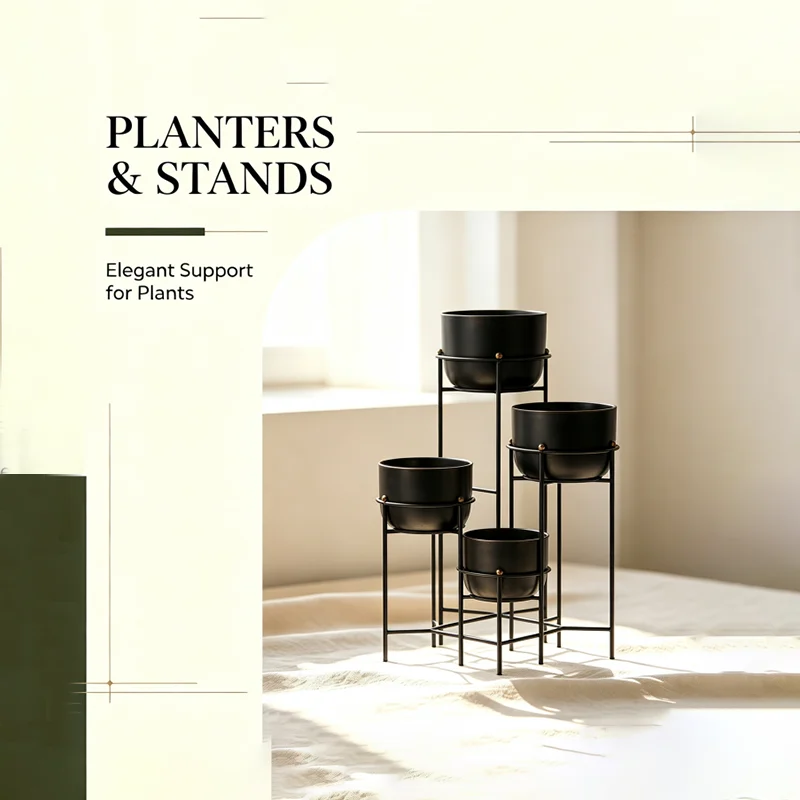
Metal planters and plant stands are the fastest-growing garden category of 2026. Explore the styles, finishes, and styling ideas behind the trend — plus how custom metal planter programs work for retailers and brands.
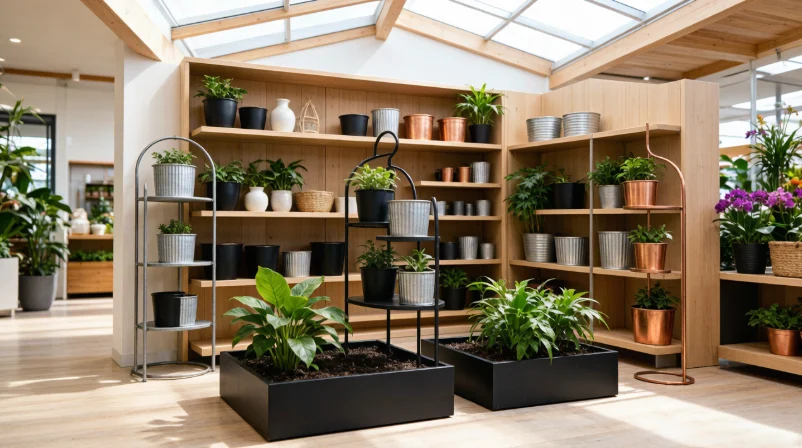
Walk through any garden center this season and you’ll notice something has shifted.
The plastic pot wall is quieter. The wooden crate displays are thinner. And front and center — on end caps, in feature displays, dominating the “new arrivals” section — stands row after row of metal planters and stands: matte-black tiered stands, galvanized troughs, powder-coated pedestal planters in colors nobody offered five years ago.
This isn’t a coincidence, and it isn’t a micro-trend. The shift toward metal plant stands and metal garden planters is the biggest material story in the garden category since resin took over in the 90s — and it’s being driven by forces on both sides of the counter: what homeowners want, and what retailers need.
Here’s the full story of the trend, what to look for whether you’re styling a patio or stocking a shelf, and why “coordinated programs” have become the industry’s favorite phrase.
Gardeners discovered elevation, and they discovered metal — at the same time.
Two movements converged:
Metal sits precisely at the intersection of both: it’s the material that makes a plant stand look like furniture rather than gardening equipment, and it’s the material that survives the elevation game’s biggest risk — weather exposure on open patios and decks.
The tiered plant stand is the single best-selling form in the category: three to five graduated shelves of powder-coated steel, holding pots at staggered heights. One stand turns a bare patio corner into a living display wall.
Consumers love them for herb gardens and shade-plant collections. Retailers love them because they merchandise an entire assortment — pots, plants, accessories — in one footprint of floor space.
A metal pedestal planter elevates a single specimen plant into a focal point: flanking entryways, anchoring path endings, formalizing a courtyard. The trend pairing for 2026 is a matte-black pedestal with a sculptural topiary or a statement urn — the “modern classical” look that’s dominating shelter magazines.
The metal raised planter (think galvanized troughs and powder-coated rectangular beds) has become the suburban vegetable garden’s default infrastructure: no rot, no warp, clean lines that look intentional even in February. Metal beds also warm soil faster in spring — a genuine functional edge over wood.
The unsung hero of the category: metal plant stands with wheels. A large ceramic planter holds water and soil and can weigh over 80 pounds. Casters turn immovable pots into movable architecture — chase the sun, dodge a storm, reposition for a party. Anyone who has ever sacrificed a shoulder to autumn frost prep understands immediately.
The genuinely new development in 2026: planters and stands are no longer sold as isolated pieces but as coordinated metal planter programs — matching material, finish, and design language across tiered stands, wall-mounted pieces, pedestals, and floor planters, so a whole patio (or a whole retail display) reads as one designed collection.
For the gardeners reading: the trend is easy to join well. A few principles that separate the styled from the stacked:
And the seasonal note: metal planters and stands are the rare garden purchases that photograph as well in October — beside mums and pumpkins — as they do in June. Retail merchandisers know this; it’s why fall reset displays lean so heavily on the category now.
If you’re reading this from the buying side of the industry, the custom-manufacturing side of the trend has matured considerably. Specialist metal garden decor manufacturers now run full OEM/ODM programs for planters and stands, which in practice means:
The buyers having the best experience with these programs tend to share the same prep: they arrive knowing their target retail price point, their region’s weather realities (coastal salt vs. desert UV changes the finish conversation), and their volume tier — which turns a quote request into a productive conversation fast.
The short version of a decade of category consolidation: retail garden is becoming a designed-goods business, and designed goods run on custom manufacturing. The brands winning shelf space in 2026 are the ones whose planters and stands look like they came from the same pencil — because they did.
Do metal planters get too hot for plants in summer?
Dark metal in full sun will warm soil faster than wood or plastic — a plus in spring, a watch-point in peak summer. Simple fixes: lighter finishes for hot climates, or pot-in-pot planting where the inner pot insulates roots.
Can a metal plant stand hold a large ceramic planter safely?
A properly engineered powder-coated steel stand rated for the weight — yes, comfortably. Check the stated weight capacity against the planted pot’s wet weight; quality stands publish this figure.
How do I keep metal planters looking new?
Powder-coated steel: rinse occasionally, touch up chips promptly. Stainless: rinse — that’s the whole routine. Compare that to resealing wood or replacing sun-chalked plastic annually.
What’s the MOQ reality for custom plant stand programs?
Programs are quote-based and scale with customization depth; finish-only customization runs leaner than full structural ODM. Bringing target size, finish, quantity, and packaging requirements to the first conversation keeps lead times short.
The Takeaway
The metal planters and stands trend isn’t really about metal — it’s about gardens becoming designed spaces, and designed spaces need furniture-grade pieces that survive the weather and photograph beautifully in every season.
For gardeners: one tiered stand and one pedestal, styled with restraint, will transform a flat corner into the most-pinned part of your yard.
For the trade: the category’s margin story, its merchandising flexibility, and its custom-program maturity make it one of the most rational bets in garden retail right now.
Either way, the elevation is happening. The only question is whether you’re standing under it — or on it.